

The Death of Static IVR: Conversational Telephony Has Arrived
For more than three decades, the automated customer telephone experience was defined by the frustrating, labyrinthine Interactive Voice Response (IVR) menu: "Press 1 for billing, press 2 for reservations, or hold to wait twenty minutes for a representative." Callers despised IVR systems because they were inflexible, slow, and incapable of understanding nuanced human speech.
In 2026, static IVR systems are obsolete. The convergence of ultra-low-latency automatic speech recognition (ASR), streaming large language models (LLMs), human-like neural text-to-speech (TTS), and intelligent Voice Activity Detection (VAD) has birthed autonomous conversational voice agents. These synthetic agents can converse with human callers over ordinary telephone lines with sub-450 millisecond latency, handle natural interruptions without breaking cadence, check real-time CRM databases, schedule calendar bookings, and resolve complex tier-1 and tier-2 customer support inquiries without human escalation.
💡 Pro-Tip for Business Leaders:
Compare modern telephony automation platforms and neural acoustic models in our Audio, Voice & Music AI Directory and Customer Support AI Tools.
1. The Four Technical Pillars of Sub-500ms Conversational Voice
To conduct a telephone call that feels genuinely natural, the entire round-trip processing time from the moment a human finishes a syllable to the moment the AI begins speaking must remain under 500 milliseconds. Crossing the 700ms threshold causes users to experience an awkward pause, causing them to repeat themselves and derail the conversation. Leading voice platforms achieve fluid responsiveness through four pipelined layers:
- Streaming Voice Activity Detection (VAD): Intelligent VAD algorithms run locally on the telephony audio stream to detect not just sound volume, but conversational pauses. They differentiate between an affirmative filler grunt ("uh-huh") and an intentional user interruption where the human wants to take back the conversational floor. When an interruption is detected, the audio playback pipeline instantly cancels existing buffer streaming without pops or clicks.
- Streaming Speech-to-Text (ASR): Ultra-fast transcribers like Deepgram Nova-3 and Whisper Streaming emit continuous token streams within 120ms of audio intake, enabling the system to begin language inference before the caller has even drawn their next breath.
- Speculative Token Generation via Fast LLMs: Voice orchestration backends utilize optimized frontier reasoning models (such as Claude 3.5 Haiku, GPT-4o Mini, or fine-tuned Llama 3.3 70B) tuned for conversational brevity. Using speculative decoding, the LLM emits the opening confirmation clause ("Sure, I can check your account...") within 150ms.
- Streaming Neural Acoustic Synthesis: Providers such as ElevenLabs Turbo v2.5 and Cartesia Sonic receive the LLM tokens chunk by chunk and immediately stream raw PCM audio bytes over WebRTC or SIP trunks directly into the telephone call.
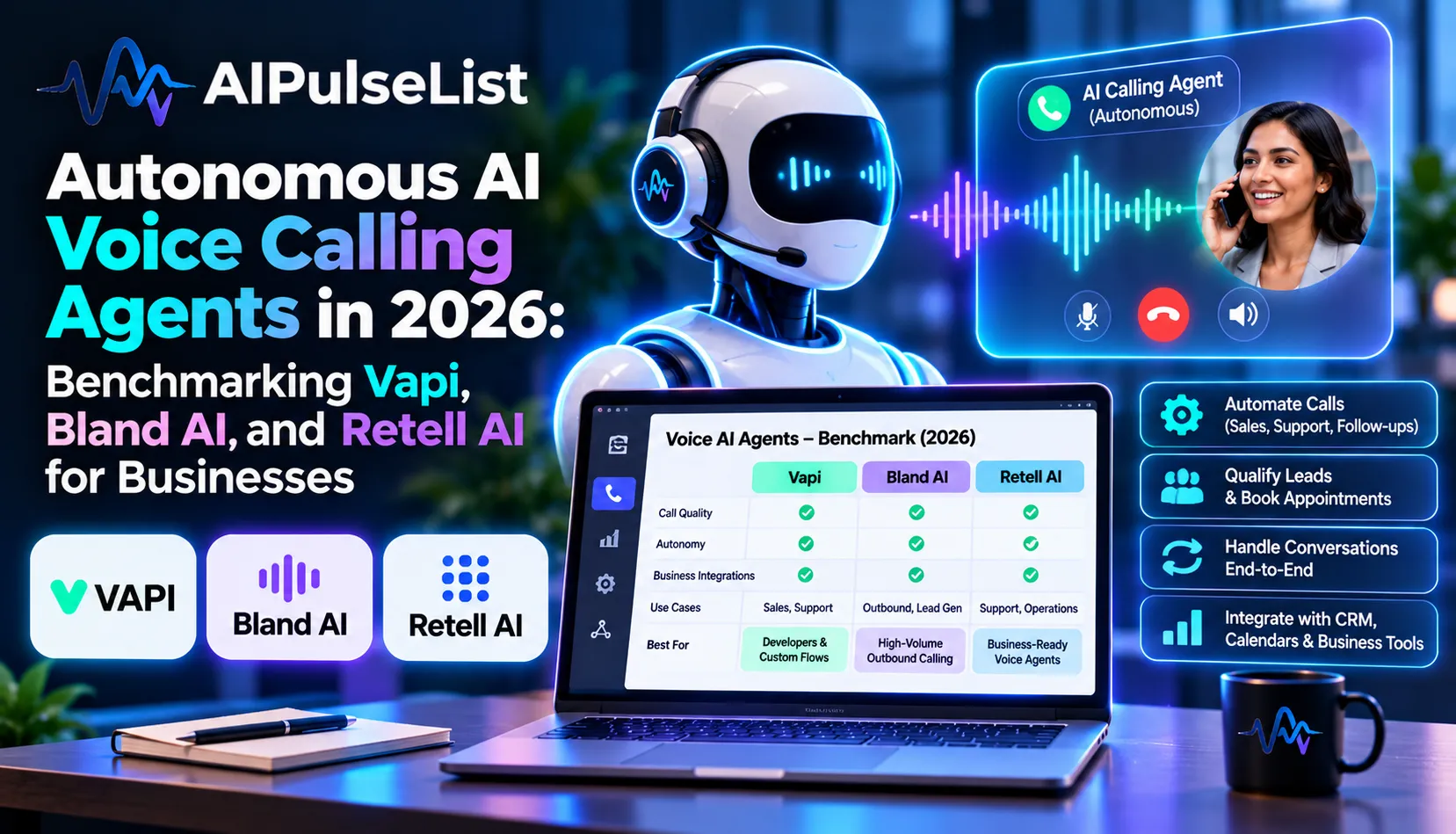
2. Comparative Benchmark: Vapi vs. Bland AI vs. Retell AI
Our telephony engineering team evaluated the three market leaders across audio latency, tool-calling reliability, customization, and telecommunications compliance:
| Voice Platform | Average Latency | Tool & API Calling | Telephony Options | Starting Pricing |
|---|---|---|---|---|
| Vapi.ai | ~420ms - 550ms | Exceptional Serverless Webhooks & JSON Schema | BYO Twilio / Vonage / SIP trunking | $0.05/min platform fee + provider costs |
| Bland AI (Bland.is) | ~480ms - 620ms | Native Pathways graph visual builder | Turnkey numbers across 40+ countries | $0.09 - $0.12/minute all-inclusive |
| Retell AI | ~390ms - 490ms | Custom LLM websocket endpoints & Function calling | Twilio integration & Web call SDKs | $0.07 - $0.10/minute |
3. Telephony Trunking: Connecting Voice AI to SIP Trunks and Webhooks
To deploy voice agents into production contact centers, systems engineers route live audio streams through Session Initiation Protocol (SIP) trunks. Modern voice orchestration platforms connect directly to telecommunications carriers like Twilio, Telnyx, or AWS Chime using standard WebSocket connections.
When a call arrives, the SIP gateway establishes a full-duplex bi-directional audio channel streaming raw G.711 μ-law audio at 8,000 Hz or Opus audio at 24,000 Hz. The orchestrator triggers an initial webhook request to your application backend, delivering caller identification metadata:
// Sample Inbound Telephony Webhook Payload { "call_id": "call_98f7e2a14", "from_number": "+14155552671", "to_number": "+18005550199", "crm_context": { "customer_name": "Sarah Jenkins", "tier": "enterprise", "open_support_ticket": "TKT-8841" } }
By injecting the customer's CRM history directly into the agent's initial system prompt before the first greeting is uttered, the agent can greet the caller by name and immediately ask if they are following up on their open support ticket, delivering a personalized white-glove experience.
4. High-Value Enterprise Deployments: Where Voice AI Excels
Modern businesses are deploying autonomous voice agents across both inbound customer service and proactive outbound operational workflows:
- Automated Appointment Booking & Rescheduling: Dental clinics, law firms, and HVAC service contractors deploy voice agents that integrate directly with Google Calendar, Acuity, or Salesforce Scheduler. The agent verifies customer identification, checks calendar availability, and confirms appointments with zero human staff required.
- Inbound E-Commerce Order Support: Voice agents authenticate callers via phone number matching or one-time verification SMS, retrieve real-time parcel tracking numbers from Shopify or FedEx APIs, and initiate return authorization labels seamlessly.
- Proactive B2B Lead Qualification: When a prospect downloads a technical whitepaper on a website, an outbound voice agent dials the prospect within three minutes to ask three strategic qualification questions (budget, timeline, authority) and automatically transfers qualified decision-makers to live sales executives.
5. Regulatory Compliance & Ethical Guardrails in 2026
Deploying telephone automation requires strict adherence to international and US telecommunications mandates. Failure to implement technical guardrails can lead to catastrophic fines under the Telephone Consumer Protection Act (TCPA) and FCC synthetic voice regulations:
- Mandatory Voice Disclosure: In California, the European Union, and multiple jurisdictions, AI voice agents must identify themselves as synthetic entities within the first ten seconds of the call: "Hello, this is an automated AI assistant calling from Horizon Logistics."
- Real-Time Human Hand-off: The voice orchestration logic must include an immutable sentiment escape hatch. If a customer expresses high frustration or explicitly demands a live representative ("Let me speak to a person"), the agent must gracefully warm-transfer the call via SIP transfer with an attached JSON call summary so the human operator has immediate context.
- STIR/SHAKEN Caller ID Authentication: Outbound calling systems must implement full A-level cryptographic STIR/SHAKEN attestation certificates on their telecom trunks to prevent telecommunication carriers from flagging calls as "Spam Likely."
Frequently Asked Questions (FAQs)
What happens if the caller has a thick accent or noisy background?
Modern ASR engines (like Deepgram Nova-3) are trained on millions of real-world telephony audio hours with heavy street noise, wind, and diverse global accents. When confidence scores drop below a predetermined threshold, the voice agent intelligently asks a polite clarifying question rather than guessing.
How much does it cost to operate an AI voice agent compared to a human call center?
A typical US onshore call center agent costs between $25 to $35 per hour ($0.42 - $0.58/min). An autonomous AI voice agent operates at approximately $0.08 to $0.14 per minute (all-inclusive for telephony, ASR, LLM, and TTS), delivering an 80% reduction in per-minute operating costs with zero wait times.
Can AI voice agents speak multiple languages during the same phone call?
Yes. Platforms like Vapi and Retell feature dynamic language detection. If a caller switches from English to Spanish or French mid-conversation, the underlying acoustic model seamlessly switches pronunciation and vocabulary within a single conversational turn.
How do voice agents prevent audio feedback loops during speakerphone calls?
Telephony gateways implement Acoustic Echo Cancellation (AEC). By subtracting the agent's own synthesized output audio from the incoming microphone signal in real time, the agent avoids transcribing its own words as user input.
Conclusion: The Future of Real-Time Enterprise Audio
Conversational AI voice agents represent the single most impactful customer service development of the decade. By deploying low-latency, empathetic, and compliant voice workflows, forward-thinking organizations can deliver instantaneous 24/7 service resolution while empowering human teams to focus on complex, high-empathy customer relationships.