

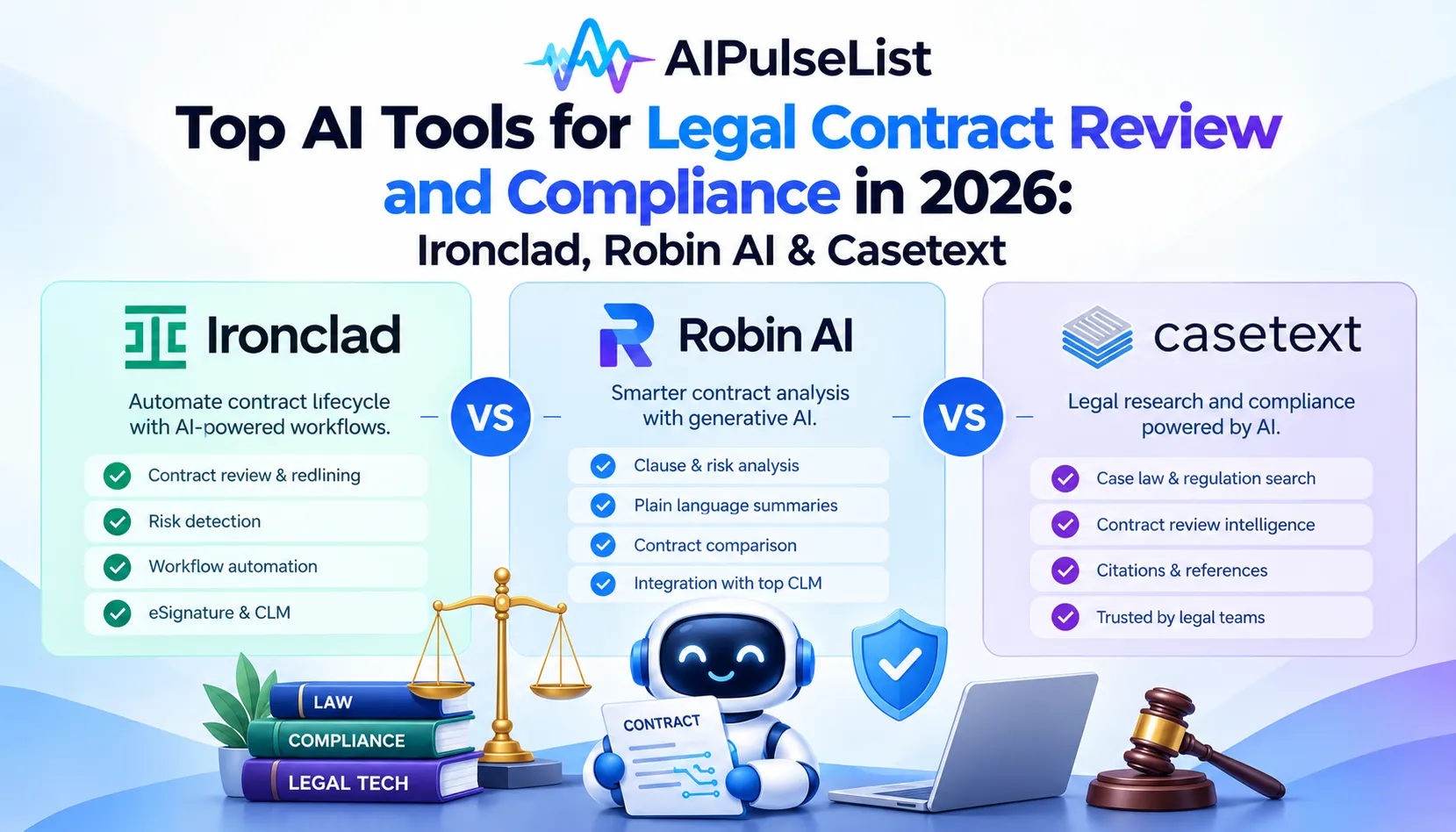
The Generative Transformation of Legal Practice
In no professional discipline is precision of language more consequential than the practice of law. A single omitted clause, ambiguous indemnification scope, or poorly defined termination provision can expose a corporation to millions of dollars in unexpected liability or prolonged litigation. Consequently, the legal industry was historically notorious for its resistance to technological disruption, relying on manual review methods that had changed little over the past fifty years.
In 2026, however, the legal profession has reached an unprecedented inflection point. As corporate transactional volumes surge and regulatory compliance demands (such as the EU AI Act, global privacy directives, and cross-border data transfer mandates) multiply exponentially, manual contract review has become economically untenable.
Modern legal artificial intelligence engines are not generic conversational chat tools. They are purpose-built, fine-tuned legal foundation architectures trained on hundreds of thousands of judicial opinions, SEC filings, and standard commercial agreements. Today, in-house counsel and boutique law firms leverage AI to redline complex 60-page Master Services Agreements (MSAs) in minutes, cross-reference organizational playbook preferences, and flag latent indemnification exposures with surgical accuracy.
💡 Pro-Tip for Legal Teams:
Review verified software in our Legal & Compliance AI Tools Directory to compare security certifications, pricing models, and integrations.
What Separates Legal AI from General Foundation Models?
General-purpose chatbots are fundamentally unsuitable for professional legal workflows due to their probabilistic tendency to hallucinate non-existent precedents, miss nuanced jurisdictional exceptions, and fail strict attorney-client privilege boundaries. In 2026, certified legal intelligence platforms adhere to three non-negotiable architectural standards:
- Corpus-Grounded Retrieval with Exact Pinpoint Citations: Every assertion, suggested redline, or counter-clause must provide an exact clickable citation to verified statutory code, case law, or internal corporate playbooks.
- Defensive Playbook Enforcement: Rather than suggesting arbitrary revisions, the system strictly enforces the organization's pre-approved standard terms (e.g., "Cap liability at 1x contract value, reject mutual indemnification on IP infringement, require Delaware governing law").
- Strict Non-Ingestion Data Guarantees: Enterprise-grade confidentiality agreements guaranteeing that uploaded draft agreements and sensitive trade secrets are never stored in public memory caches or used to train third-party models.
1. Ironclad Contract Lifecycle Management (CLM) & AI Assist
Ironclad is widely recognized as the market leader in enterprise Contract Lifecycle Management. Its integrated AI engine, powered by proprietary fine-tunes and Anthropic Claude, is designed to serve as an always-on junior associate for high-velocity commercial legal teams.
Primary Strengths:
- Automated Playbook Redlining: Ingests incoming counterparty paper, compares clauses against your company's approved fallback positions, and automatically inserts redlines in standard Microsoft Word (.docx) track-changes format.
- Repository Intelligence: Indexes thousands of historical signed contracts, allowing general counsel to answer questions like: "How many of our enterprise vendor agreements include non-standard audit windows?" in seconds.
- Approval Workflow Routing: Automatically flags financial commitments exceeding budget thresholds and routes them to the Chief Financial Officer before contract execution.
2. Robin AI: The Hybrid Lawyer-in-the-Loop Engine
Robin AI takes a uniquely reassuring approach to legal automation by combining Anthropic foundation models with an in-house team of certified legal professionals who audit and verify complex automated redlines.
Primary Strengths:
- Unmatched Redline Velocity: Accelerates standard Non-Disclosure Agreement (NDA), Software as a Service (SaaS), and Employment Agreement review by up to 85%, cutting turnaround times from three days to under an hour.
- User-Friendly Word Plugin: Attorneys can review and accept AI-recommended clause revisions directly inside Microsoft Word without having to copy-paste between external browser windows.
- Exceptional Cost Predictability: Offers transparent tier-based pricing tailored for growing mid-market companies that need enterprise-grade legal horsepower without hiring three additional full-time counsel.
3. Casetext CoCounsel (Part of Thomson Reuters)
Acquired by Thomson Reuters and supercharged with the Westlaw legal database, CoCounsel was the pioneer in applying GPT-4 class reasoning directly to complex litigation preparation, deposition analysis, and statutory research.
Primary Strengths:
- Westlaw Primary Law Integration: Directly cross-references federal statutes, state codes, and appellate decisions with zero risk of fabricated citations.
- Deposition & Discovery Analysis: Upload hundreds of pages of raw witness testimony or document production; CoCounsel extracts timeline inconsistencies, conflicting dates, and evidentiary admissions in minutes.
- Contract Risk Auditing: Quickly scores incoming draft agreements against custom compliance checklists, highlighting predatory terms that deviate from market standards.
Comparative Benchmark Matrix
| Platform Solution | Primary Target Audience | Key Advantage | Format Support | Enterprise Security |
|---|---|---|---|---|
| Ironclad | Enterprise In-House Legal & Procurement | End-to-End Workflow & e-Signature | Word (.docx), PDF | SOC 2 Type II, ISO 27001 |
| Robin AI | Mid-Market Startups & Corporate Counsel | Hybrid Lawyer-in-the-Loop Redlines | Word Add-in, Web App | GDPR, HIPAA, Bank-grade AES-256 |
| Casetext CoCounsel | Litigators & Boutique Law Firms | Westlaw Judicial Database Integration | PDF, OCR Scans, Word | Strict Attorney Privilege Safeguards |
Navigating Multi-Jurisdictional Compliance & Cross-Border Regulatory Regimes
One of the most complex challenges facing multinational enterprise legal teams in 2026 is managing divergent international legal standards across borders. A software licensing agreement that is fully enforceable under Delaware general corporate law may contain provisions that directly violate European Union data sovereignty directives (such as the EU AI Act's high-risk transparency mandates or GDPR Chapter V international transfer restrictions).
Modern legal AI platforms incorporate automated multi-jurisdictional risk classification engines. When an attorney uploads an international vendor agreement, the engine flags jurisdictional friction points:
- Governing Law & Arbitration Clauses: Highlighting attempts by foreign counterparties to mandate dispute resolution in unpredictable arbitration venues or foreign courts.
- Data Protection Addenda (DPA) Compatibility: Auditing Standard Contractual Clauses (SCCs) to ensure automated biometric or AI-generated data flows comply with local statutory retention caps.
- Limitation of Liability Asymmetries: Detecting disguised liability carve-outs where gross negligence or data breach indemnities are subtly capped while standard operational liabilities remain unlimited.
Practical Playbook: Implementing AI Contract Review in 5 Stages
Transitioning legal operations to artificial intelligence must be methodical and risk-managed. Here is the framework recommended by enterprise legal operations directors:
- Formalize the Corporate Negotiation Playbook: AI cannot enforce your company's legal boundaries if they only exist inside senior attorneys' heads. Document standard positions, unacceptable risks, and fallback language in structured tables.
- Establish Low-Risk Pilot Categories: Begin implementation strictly on standard bilateral Non-Disclosure Agreements (NDAs) and vendor terms of service before attempting multi-million-dollar M&A merger documents.
- Mandate Human Final Approval: Enforce strict policy that no contract is executed without human attorney signature. The AI prepares the markup and highlights the risks; the lawyer makes the final commercial judgment.
- Audit for Implicit Liability Shifts: Regularly review redlined outputs to ensure counterparty attorneys have not buried subtle changes in indemnification definitions or warranties that automated parsers might misclassify.
- Conduct Regular Prompt & Model Audits: Track redline acceptance rates across team members to identify which playbook guidelines require clearer definition.
Ethical Responsibility & The Future of Law
The introduction of generative intelligence into the legal profession does not diminish the need for skilled attorneys; rather, it elevates the counselor's role. By eliminating the grueling, late-night drudgery of manually comparing twenty versions of standard boilerplate text, legal professionals can dedicate their intellect to high-level strategic counseling, creative deal structuring, and ethical dispute resolution. In 2026, the attorneys who thrive are not those who resist artificial intelligence, but those who wield it with unmatched expertise.